
LUFS Explained: Understanding Loudness in Modern Music Production
In today’s music industry, loudness is no longer just about making a track as loud as possible. With the rise of streaming platforms and automatic volume normalization, producers must understand how loudness is measured and how it affects the final listening experience.
One of the most important metrics in modern audio production is LUFS, a standard used to measure perceived loudness. Understanding LUFS allows producers to create music that sounds professional, balanced, and consistent across streaming services, radio, and live playback systems.
For modern producers, learning how loudness works is just as important as learning mixing or mastering.
What Is LUFS?
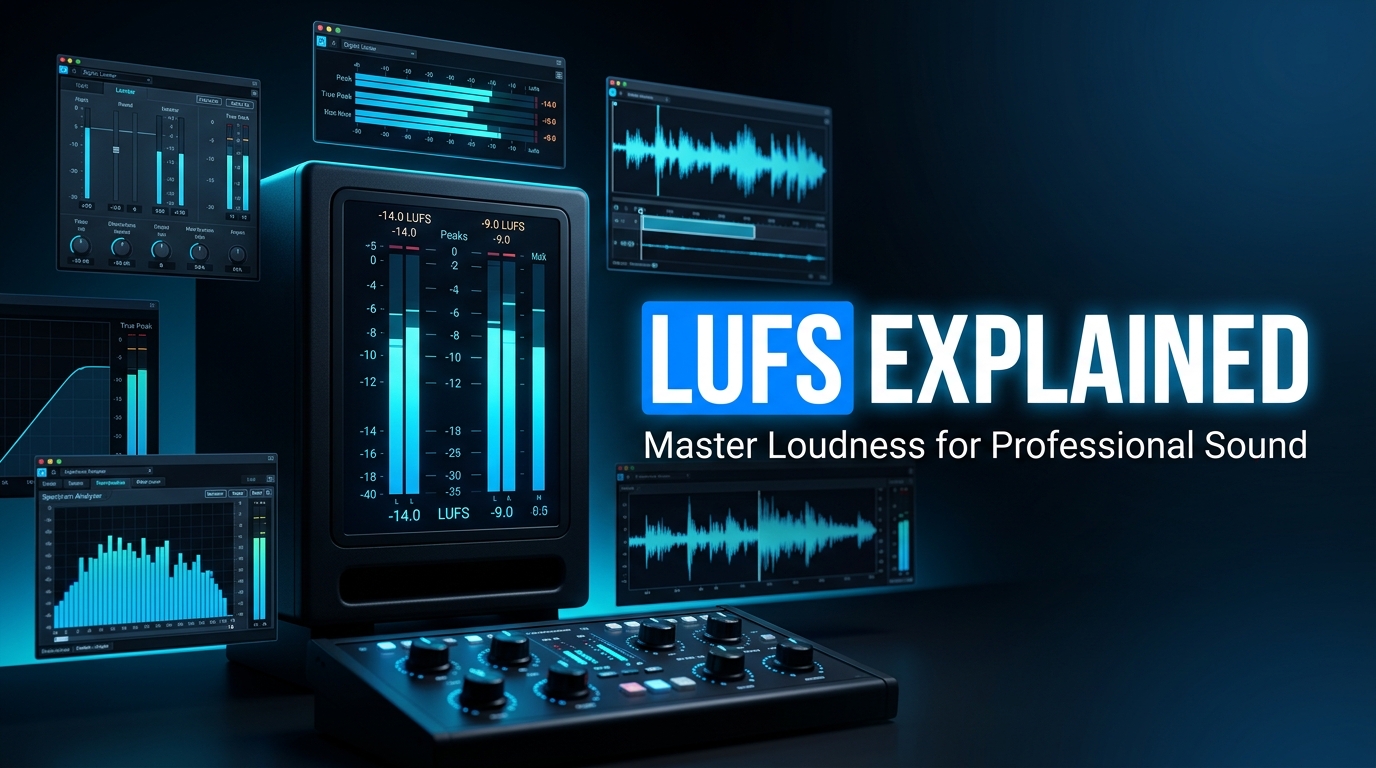
LUFS stands for Loudness Units Full Scale, a measurement used to determine how loud audio sounds to human listeners.
Unlike traditional peak meters, which only measure signal levels, LUFS reflects perceived loudness over time. This makes it the most accurate way to measure how a track will be experienced by listeners.
LUFS is now the global standard for:
- Streaming platforms
- Broadcasting
- Music distribution
- Film and television audio
- Podcast production
- Online content creation
Most professional mastering engineers rely on LUFS to ensure consistent loudness across different releases.
Why LUFS Matters in 2026
Streaming platforms have changed the rules of loudness. In the past, louder tracks often sounded more powerful because they stood out next to quieter songs.
Today, platforms automatically normalize volume levels.
This means:
Extremely loud tracks may be turned down
Quiet tracks may be turned up
Dynamic balance is more important than raw volume
As a result, understanding loudness targets has become essential for professional music production.
Typical Loudness Targets for Streaming Platforms
Different platforms use slightly different loudness standards, but most fall within a similar range.
Common loudness targets include:
Streaming platforms:
−14 LUFS
YouTube:
Approximately −14 LUFS
Club and festival music:
−8 to −6 LUFS
Broadcast television:
Around −23 LUFS
These targets help ensure consistent playback across different listening environments.
Integrated LUFS vs Short-Term vs Momentary
Modern loudness meters display several types of LUFS measurements. Each one provides different information about how audio behaves over time.
Integrated LUFS
This is the average loudness of the entire track from start to finish. It is the most important measurement for mastering and distribution.
Short-Term LUFS
This measures loudness over a short time window, typically around three seconds. It helps identify loud or quiet sections within a song.
Momentary LUFS
This measures loudness almost instantly. It reacts quickly to sudden changes in volume and is useful for monitoring real-time dynamics.
Understanding the difference between these measurements helps producers maintain control over their mixes and masters.
How Loudness Normalization Works
Loudness normalization is the process used by streaming platforms to adjust playback volume automatically.
If a track is louder than the platform’s target, the system reduces its volume. If a track is quieter, the system increases it.
This ensures a consistent listening experience for users.
For producers, this means:
Loudness alone no longer creates competitive advantage
Dynamic range is more valuable than excessive volume
Balanced mastering delivers better results
Modern mastering focuses on clarity, punch, and musicality rather than maximum loudness.
The Relationship Between LUFS and True Peak
Another critical concept in mastering is True Peak.
True Peak measures the highest possible signal level after digital-to-analog conversion. Even if a track does not clip in the digital domain, it can still distort during playback if True Peak levels are too high.
Typical True Peak targets:
Streaming platforms:
−1 dBTP
Broadcast:
−2 dBTP
Club playback:
Can vary depending on system and genre
Managing both LUFS and True Peak ensures clean playback across all devices.
How Producers Use LUFS in the Mastering Process
LUFS is typically measured during the final stage of production.
A common mastering workflow includes:
- Balance the mix
- Apply compression and limiting
- Monitor loudness levels
- Adjust dynamics
- Verify True Peak levels
- Export the final master
This process ensures the track meets technical standards before distribution.
Common Loudness Mistakes Producers Make
Many producers misunderstand loudness because they rely only on peak meters or volume perception.
Here are the most common mistakes:
Pushing the limiter too hard
Ignoring dynamic range
Mastering without reference tracks
Chasing maximum loudness
Skipping loudness metering
Over-compressing the mix
These mistakes can reduce clarity, introduce distortion, and make music sound fatiguing.
Best Practices for Modern Loudness Management
Professional producers follow consistent loudness practices to maintain quality and compatibility with streaming platforms.
Recommended practices include:
Use a reliable loudness meter
Leave headroom during mixing
Avoid excessive limiting
Compare with reference tracks
Monitor True Peak levels
Export high-quality audio files
These habits help maintain professional sound quality across releases.
How Loudness Affects Listener Experience
Loudness is not just a technical detail — it directly affects how listeners perceive music.
Proper loudness management improves:
Clarity
Punch
Energy
Listening comfort
Professional quality
Playback consistency
A well-balanced track feels powerful without sounding harsh or distorted.
The Future of Loudness in Music Production
Loudness standards will continue to evolve as streaming platforms refine their playback systems.
Future developments may include:
Smarter normalization algorithms
Real-time loudness adaptation
AI-assisted mastering
Dynamic playback optimization
Platform-specific mastering profiles
Understanding loudness fundamentals will remain essential for producers who want their music to sound professional in every environment.
Conclusion
LUFS has become one of the most important measurements in modern music production.
It defines how loud a track sounds to listeners, how it behaves on streaming platforms, and how it compares to commercial releases.
For producers who want consistent, professional results, understanding LUFS is no longer optional — it is a fundamental part of mastering and music distribution.